Heat Awareness and Health
What you should know
Miami is experiencing more dangerous heat than ever before—and the trend is only worsening. In fact, extreme heat is now the deadliest weather-related hazard in the United States, claiming more lives annually than hurricanes, floods, or tornadoes. By definition, extreme heat is a period of high heat and humidity with temperatures above 90 degrees for at least two to three days.
In subtropical cities like Miami, the dangers of heat are often underestimated. But the reality is that high temperatures are linked to increased hospitalizations, severe illness, and death—especially in vulnerable communities.
Heat-related illnesses begin to occur more frequently when the heat index reaches 80°F or higher, and the risk continues to rise with increasing temperatures. When the heat index exceeds 105°F, all Miami-Dade County residents are at heightened risk for conditions such as heat cramps, heat exhaustion, heat stroke, and in extreme cases, death.
Extreme heat can also worsen chronic health conditions, particularly for individuals with heart, lung, kidney disease, diabetes, or those taking medications that impair the body’s ability to regulate temperature. While everyone is vulnerable during extreme heat events, some groups are especially at risk, including:
- Pregnant people
- Adults over 65
- Young children
- Outdoor workers
- Athletes
- People living unsheltered or with limited access to AC
- Lower-income individuals
- People recreating outside
- Those with pre-existing physical and mental health conditions and/or disabilities
- Pets
Heat Awareness and Pregnancy Health:
What You Should Know
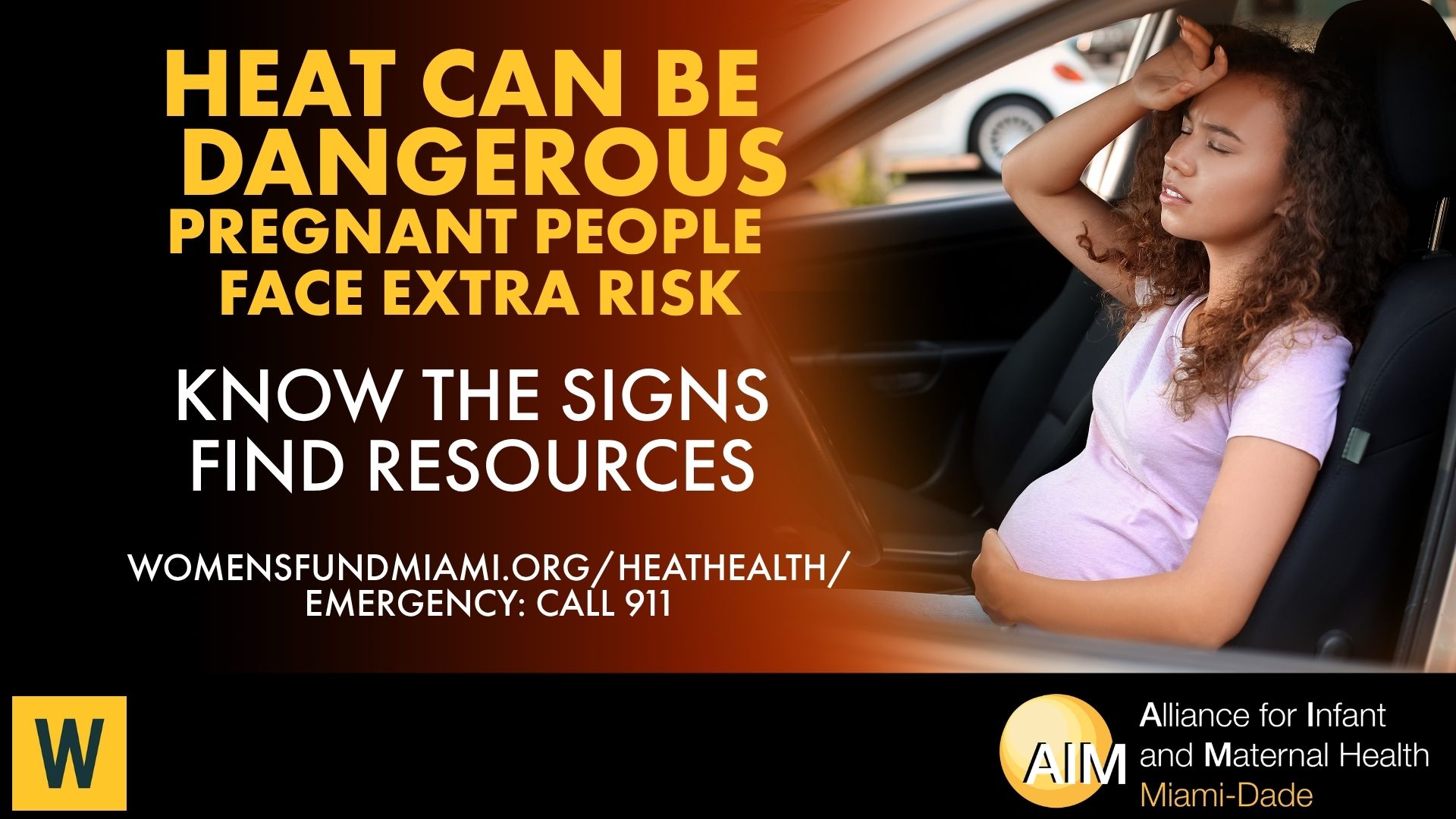
Heat exposure during pregnancy can increase health risks for both mother and baby. Even one very hot day (above the 95th percentile for temperature) may elevate the risk of complications like preterm birth, low birth weight, or stillbirth. The stress of heat on the body—especially on the heart and circulatory system—can amplify risks that are already higher during pregnancy.
Heat exposure early in pregnancy may also be linked to certain birth defects.
Pregnant people are more vulnerable to heat-related illnesses like heat exhaustion and heat stroke because their bodies are working harder to regulate temperature—for both themselves and their developing baby. Additionally, prolonged heat exposure may also impact fertility and reproductive health in both men and women.
Pregnant individuals are especially at risk of heat stress because:
- They’re more likely to become dehydrated
- Sweating may be less effective for cooling
Dehydration is usually one of the biggest causes of heat-related illnesses in pregnant people. Being dehydrated can lead to dizziness, fainting, and even Braxton Hicks contractions (“practice” contractions).
Air Quality + Heat = Higher Risk
Hot weather often worsens air pollution, increasing levels of ozone and fine particulate matter. When combined with heat, this can further raise the risk of pregnancy complications, especially for those with asthma. Poor air quality can interfere with placental development, increase inflammation, and promote blood clots.
Wildfire smoke, common in hot and dry conditions, adds another layer of danger.
Heat, Medications & Pregnancy
Many medications—including common ones for high blood pressure or asthma—can reduce the body’s ability to cool down or cause dehydration and electrolyte imbalances. This may heighten the risk of heat-related illness, fainting, arrhythmias, or kidney stress. Some antibiotics and other meds can also increase sun sensitivity.
Healthcare providers should factor in heat sensitivity when prescribing during pregnancy.
Quick Tips for Pregnant People in Hot Weather
- Stay hydrated and take cooling breaks often.
- Avoid peak heat hours when possible.
- Be cautious with medications—ask your doctor if any may increase heat risk.
- Monitor air quality and avoid outdoor activity when pollution is high.
- Those working in hot environments can request reasonable accommodations like more breaks and access to shade or AC.
Go deeper: Clinical Overview of Heat and Pregnancy

What You Can Do
The good news is that heat-related illnesses are preventable and as these trends continue, understanding heat’s impact on your health—and how to protect yourself—has never been more important. If you don’t have access to air conditioning, it’s strongly recommended to find relief at a friend’s or family member’s home that does—or visit public spaces such as libraries, shopping malls, movie theaters, or Miami-Dade cooling sites where you can safely cool down.


Ways to Cool Your Home
Electric bills are on the rise—not just because of higher rates, but also because Miami-Dade is getting hotter. Since 1970, the number of days above 90°F has increased from 84 to 133 per year—and that number is expected to keep rising.
To help you stay cool and save money, here are some no- and low-cost energy-saving tips you can use year-round.